
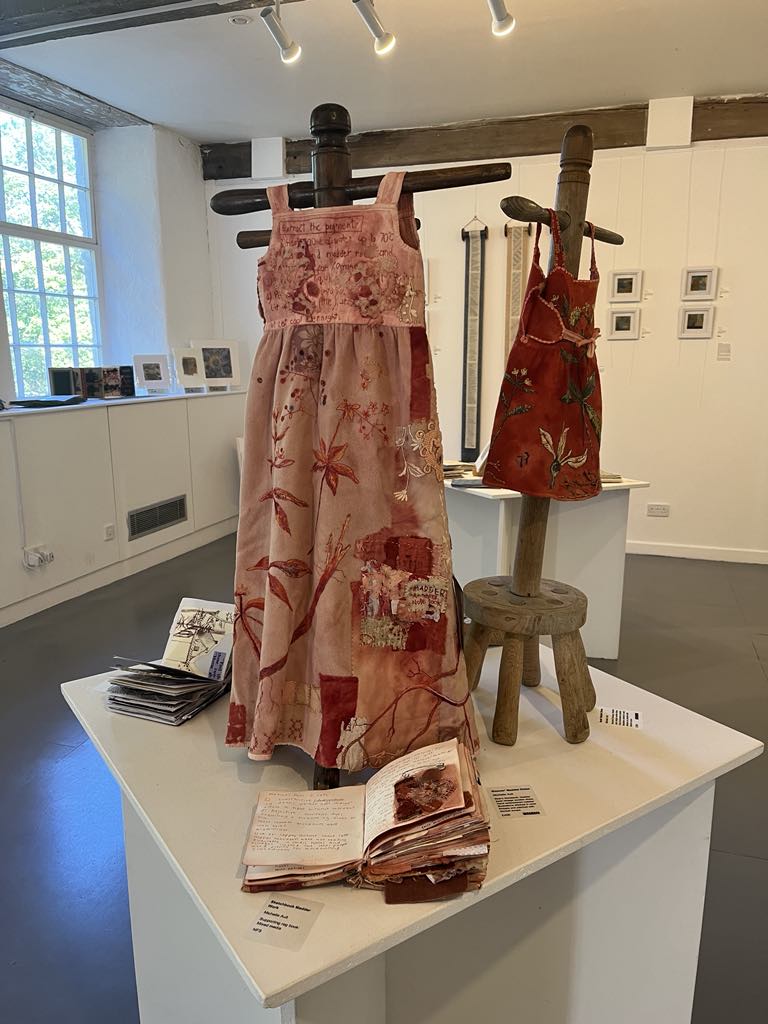
My work incorporates woollen fibres, fabrics and threads celebrating the heritage of the wool trade at Farfield Mill, reacting and responding to the mill’s historical narratives and addressing contemporary concerns regarding re-use, recycle and renewal.
In the West Riding, yarn was usually dyed by the whole family using familiar plants such as Madder root, Woad leaves and Weld flowers. This work explores the properties of Madder root dye and its modifications on woollen fabrics.
I am intrigued by the wear and tear of old textiles and the marks, stains and narratives they present. In the Mid to late 19th Century, wool was used to make baby dresses, nighties, wool wrap petticoats and slips, often being hand stitched by mothers and used as ‘first days’ dresses for infants. It is possible that local women would have made such garments for their children using wool from the mill. The recycled Madder dresses have been named after three of the girls in the Dover family: Eleanor, Jane and Sarah, the name tag being stitched into the back bodice line. Hand embroidery is used as surface decoration to identify the plants used in the dyeing process.