search
0
 

Fleece to Fabric

Clipping

This exhibition follows the skilled hand production of woollen cloth in the early eighteenth century when clothier families spun, dyed and wove fleeces bought from farmers.
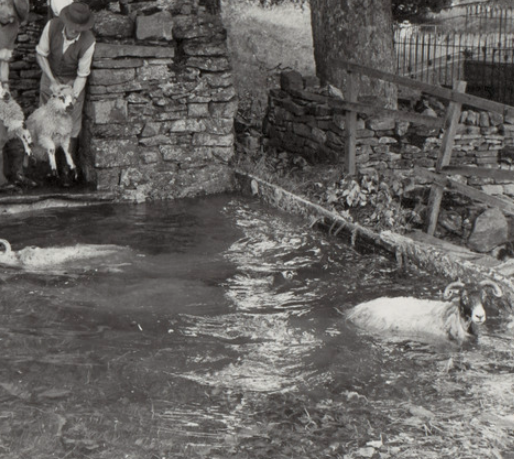
In late spring, the farmers gathered their sheep in stone wash fold enclosures before herding them into disused mill ponds or rivers dammed for this task. The sheep were dipped underwater, wetting the fleece thoroughly; this removed some of the dirt and insects before clipping.

Image – Sheep Washing: Outgang Beck ( LAVC/PHO/P0621) Kissling, Werner (1895-1988) with the permission of Special Collections, Leeds University Library under CC-BY-NC 4.0
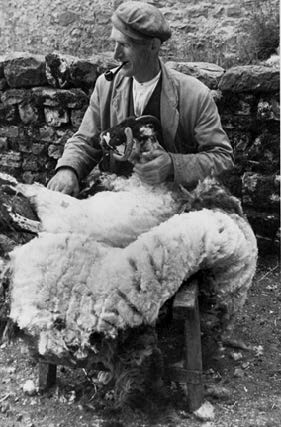
Clipping was a back breaking task: a fleece weighed around 4kg (almost 9lbs). The best fleece was from the neck, back and sides, the lower quality from legs and rump.


Image – “Sheep Shearing: Raisgill” (LAVC/PHO/P0754) by Werner Kissling
Reproduced with the permission of Special Collections, Leeds University Library under CC-BY-NC 4.0
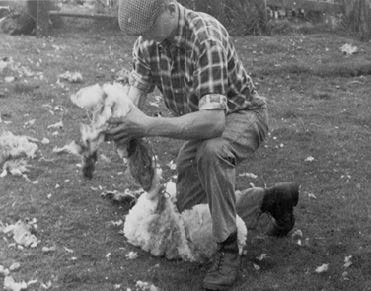
Children skirted each fleece, picking off vegetation and unusable parts. They then laid it on the ground outside up, folded in the sides and rolled the neck towards the tail, which was then used to secure the bundle ready for market.


Image – “Winding a Fleece: Apedale” (LAVC/PHO/P0739) by Werner Kissling. Reproduced with the permission of Special Collections, Leeds University Library under CC-BY-NC 4.0

Carding

Once at arm’s length, carded wool was rolled into a long strip called a roving. This could be dyed before it was spun, resulting in an even, long-lasting colour. It led to the term ‘dyed in the wool’, as the dye penetrated the fibres very effectively meaning the colour was steadfast and unlikely to change.
Image – Woman Carding Wool Jean-Francois Millet c.1855
Public Domain

After the purchase by the weaver from the farmer, fleeces were washed in hot, soapy water to remove most of the remaining dirt, grease, vegetation and parasites.
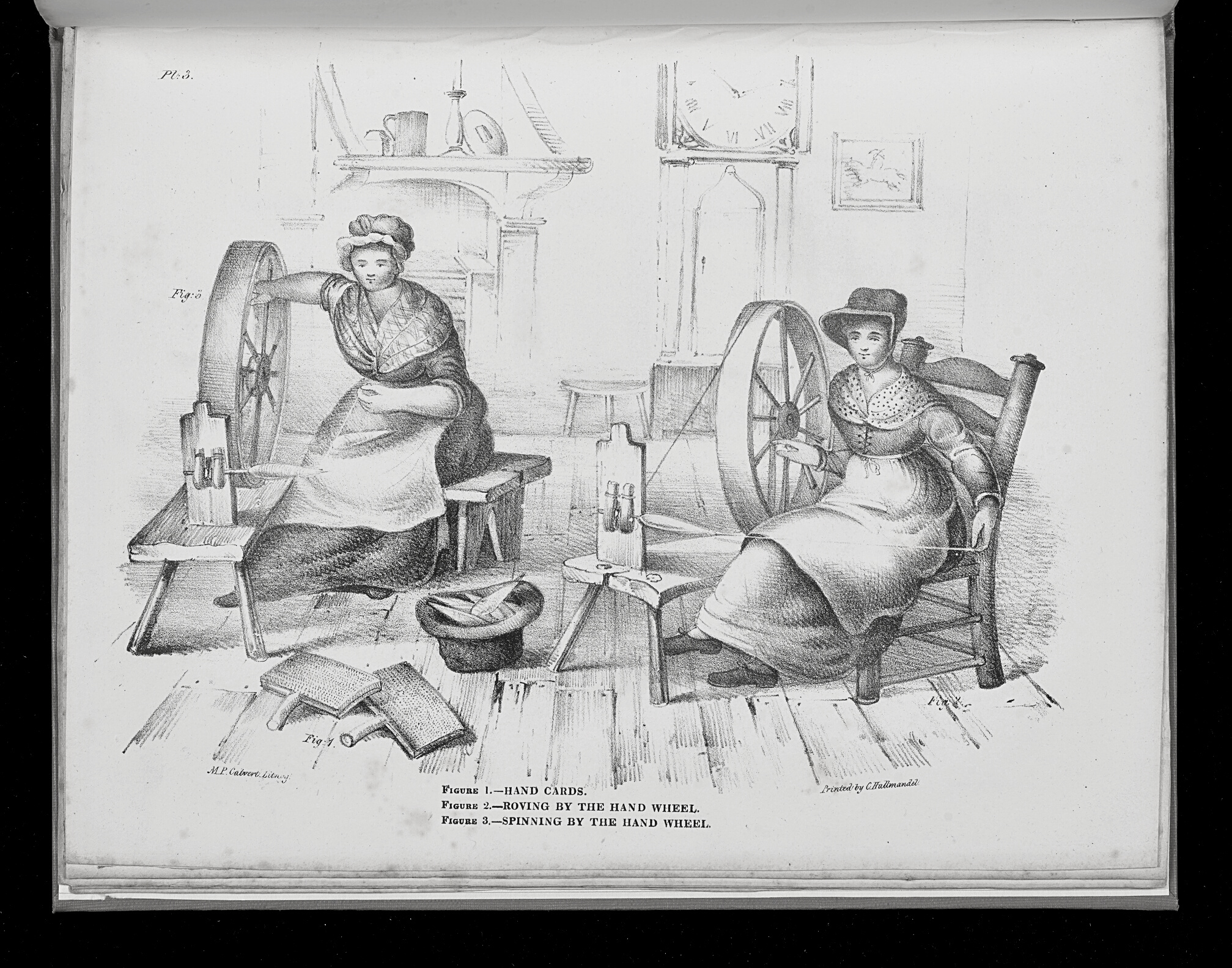
Women and children carded by pulling a handful of locks from the fleece and brushing them between carding combs. This combined the different lengths and colours of fibre, making it easier to spin.

Image – Carding, Roving and Spinning Richard Guest, A Compendious History of the Cotton Manufacture(1823) Reproduced by kindpermission of the Syndics of Cambridge University Library.

Spinning

Women were the spinners of the household. Drawing out rovings to a fine strand they then attached them to a leading thread wound round a spindle. A foot treadle turned the spinning wheel, rotating the flyer and supplying tension as yarn was created.
When the spindle was full, the thread was transferred to a reel and taken off in skeins; these could be twisted together (plyed) before weaving to create a thicker thread. The best quality yarn came from a combination of good wool and skilled spinning.

Image – Woman Spinning
The Costumes of the Yorkshire Dales 1818 George Walker

Dyeing

In the West Riding, yarn was usually dyed by the whole family using familiar plants. Favourites were madder root, woad leaves and weld flowers. The colours could fade or washout, so mordants were used to fix the dye and keep the colourfast. With wool, the mordant adhered to the wool and the dye to the mordant. Common mordants were copper, alumand iron.
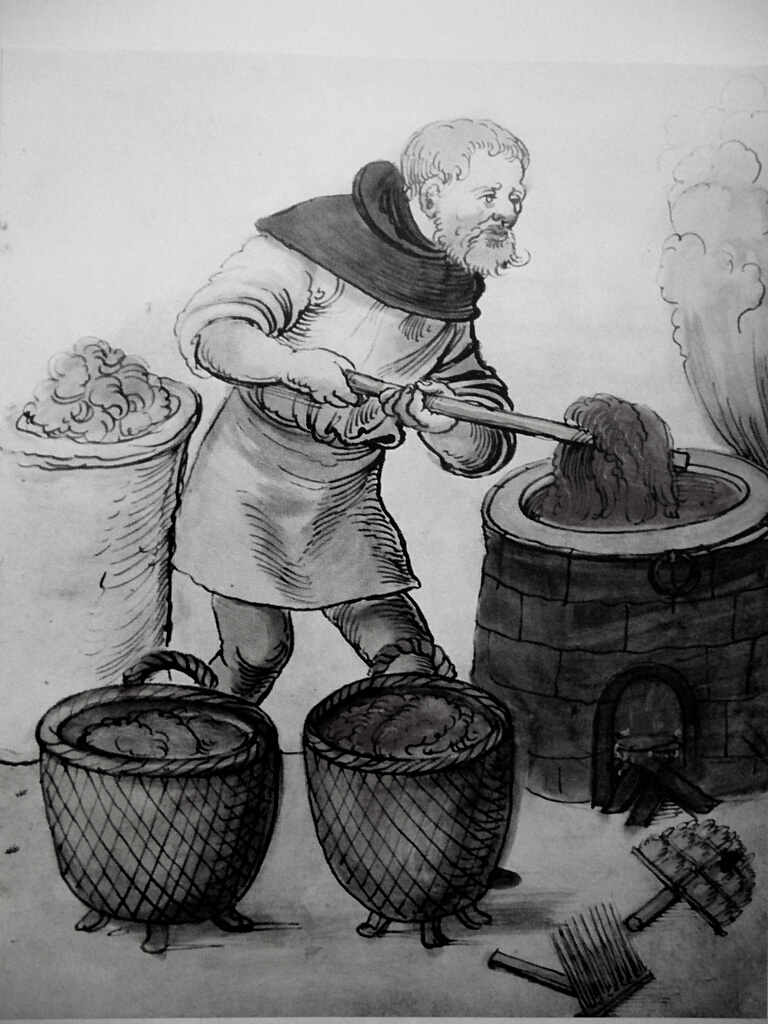
Skeins of spun yarn were soaked in heated vats holding specific measures of water, dye and mordant. Different mixes resulted in a variety of shades, and the longer the soak, the darker the colour.

Image – The Dye Workshop (Färbewerkstatt)
Public Domain wikimedia.org

Weaving

Weaving was carried out in the room with the best natural light. In weavers’ cottages the top floor was often used, where larger windows had been constructed and were more numerous than in the rest of the house.
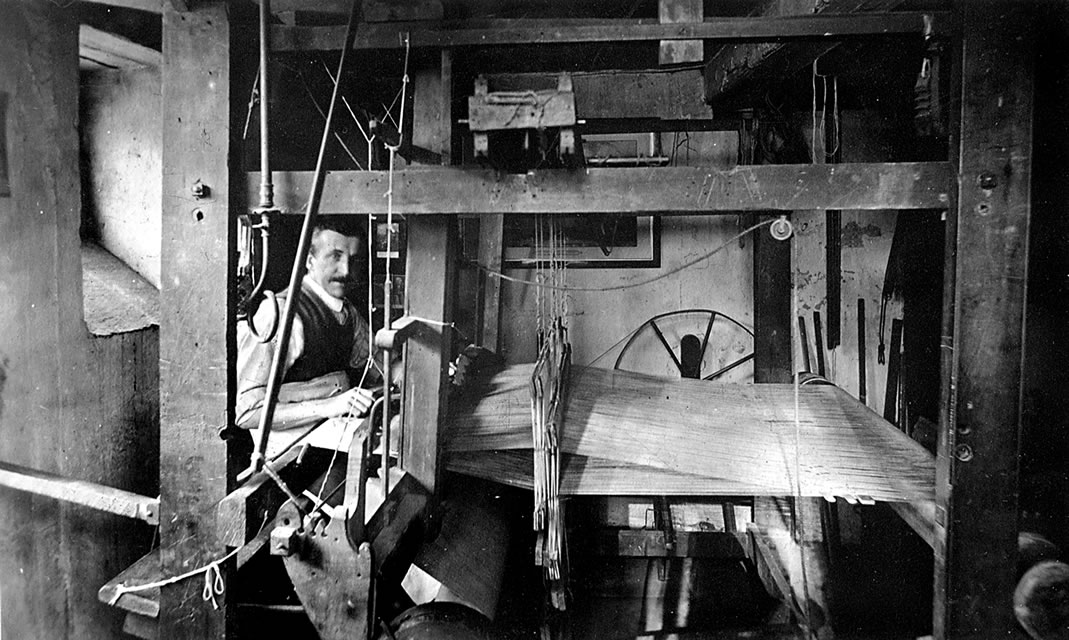
It was a quicker process than knitting or braiding for producing cloth; the warp was fixed, and the weft passed over and under, interlacing the two yarns. Different patterns were created by varying the interaction between warp and weft.

Image – Mr Dixon at his weaving loom reproduced with kind permission from Stricklandgate House Kendal

Finishing

Woven cloth was open and loose, so it was out sourced to waterwheel-driven fulling mills to be tightened and strengthened. This was done by hammering it until the fibres matted together. The cloth was first scoured using soda ash or crystals to rid it of the last traces of dirt and grease.
After rinsing, the fuller hauled the cloth into fulling stocks for pounding. The stocks were filled consecutively with stale human urine, Fullers’ earth, and hot soapy water.

Image – Fulling stocks Georg Andreas Böckler, Public domain, via Wikimedia Commons

Once complete, the cloth was rinsed and napped; a teasel frame was drawn over the surface and the resultant fuzz sheared closely to ensure a consistent smooth finish.
Cloth was then stretched outside on tenter frames using tenterhooks. This is where the phrase ‘being on tenterhooks’ comes from. Tentering set the warp and weft perpendicular to one another, straightening the cloth ready to be sold.

Image – The Cloth Finishers The Costumes of the Yorkshire Dales 1818 George Walker

Selling

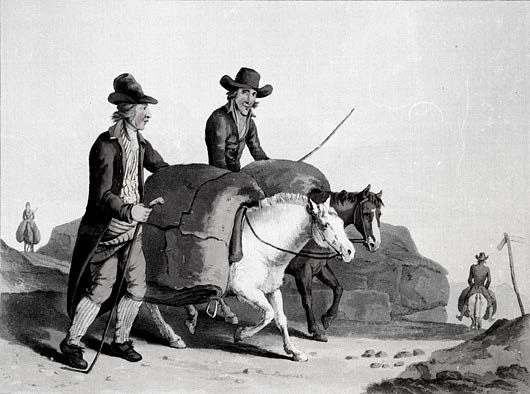
After collecting their cloth from the fuller, clothier families sold their goods at local markets in Sedbergh and Kendal.

Image – Cloth Sellers The Costumes of the Yorkshire Dales 1818 George Walker

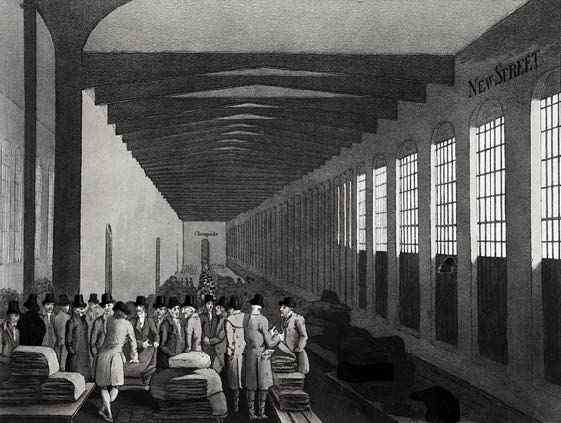
Larger merchants traded at the new cloth halls. Those in the West Riding were the best known in England – Halifax, Bradford, Wakefield, Leeds. Wool cloth was one of the most important products in the country at the time and Yorkshire amongst the leading manufacturers.

Image – The Cloth Hall The Costume of Yorkshire (1814) by George Walker

The wool trade was such a valuable source of income, to this day the Lord Speaker in the House of Lords sits on a large bag of wool called the woolsack.

Image –  Copyright House of Lords 2021 /
Photography by Roger Harris, CC BY 2.0

Close Menu