
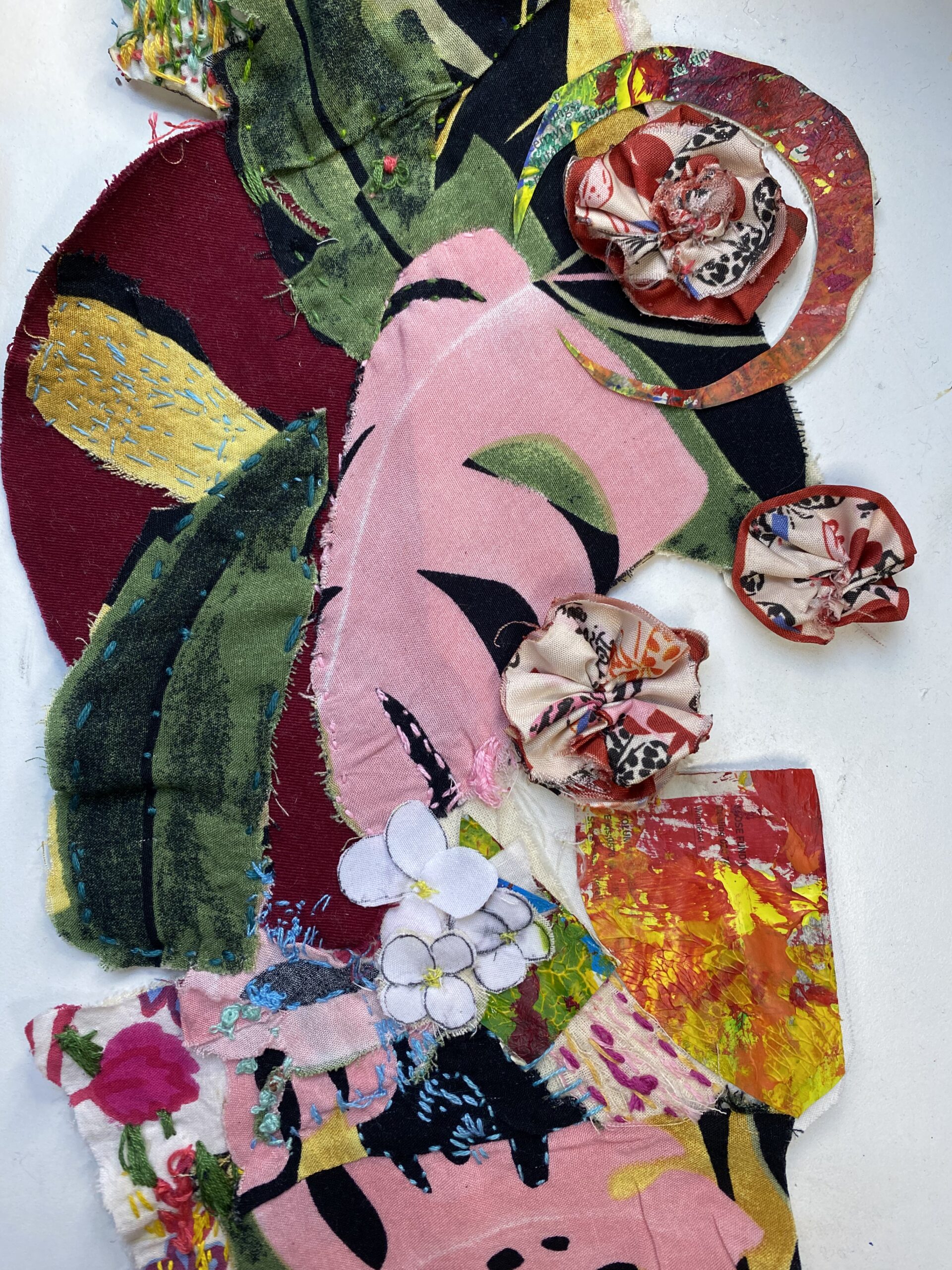
Transforming Pain into Art – Yoneko Shiraishi
This textile work investigates processes of repair, fragmentation, and reassembly through material and stitch-based practice. Constructed by joining disparate textile fragments using sashiko and hand stitching, the work foregrounds making as both a structural and conceptual act. Seams, joins, and tensions are deliberately left visible, allowing the surface to register time, labour, and intervention rather than conceal them.
The integration of Momigami introduces a contrasting material language, bringing compressed and weathered surfaces into dialogue with soft, pliable fabrics. This material tension becomes a site of transformation, where paper and textile intersect, challenging conventional boundaries between fragility and durability, surface and structure. Stitching operates not only as a method of construction but as a form of mark-making, recording repetitive gestures of care, endurance, and attention.
Conceptually, the work reflects on whether damage and change can be addressed without restoring an imagined original state. Rather than presenting repair as resolution, the piece considers togetherness as a provisional condition — assembled through ongoing acts of negotiation. In this context, metamorphosis is understood not as a sudden or complete shift, but as a gradual process shaped by time, repetition, and material engagement. Through making, pain is not erased but reconfigured, suggesting that artistic practice can operate as a site of transformation where vulnerability and resilience coexist.